MECH200 Screwdriver Project
Lessons Learned
Tips for upcoming students:
In addition to time management (the constant companion), there were several other lessons learned from this project.
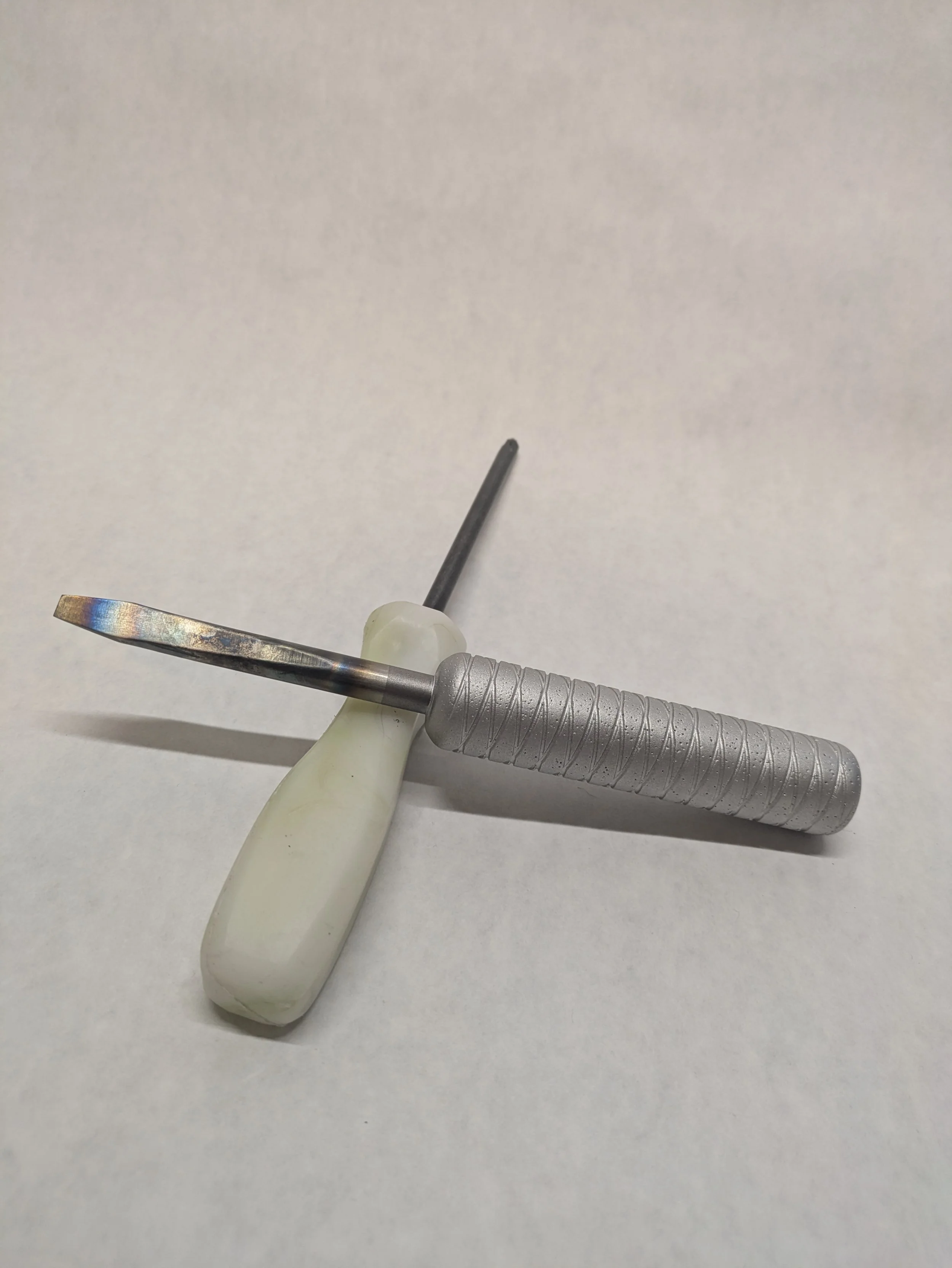
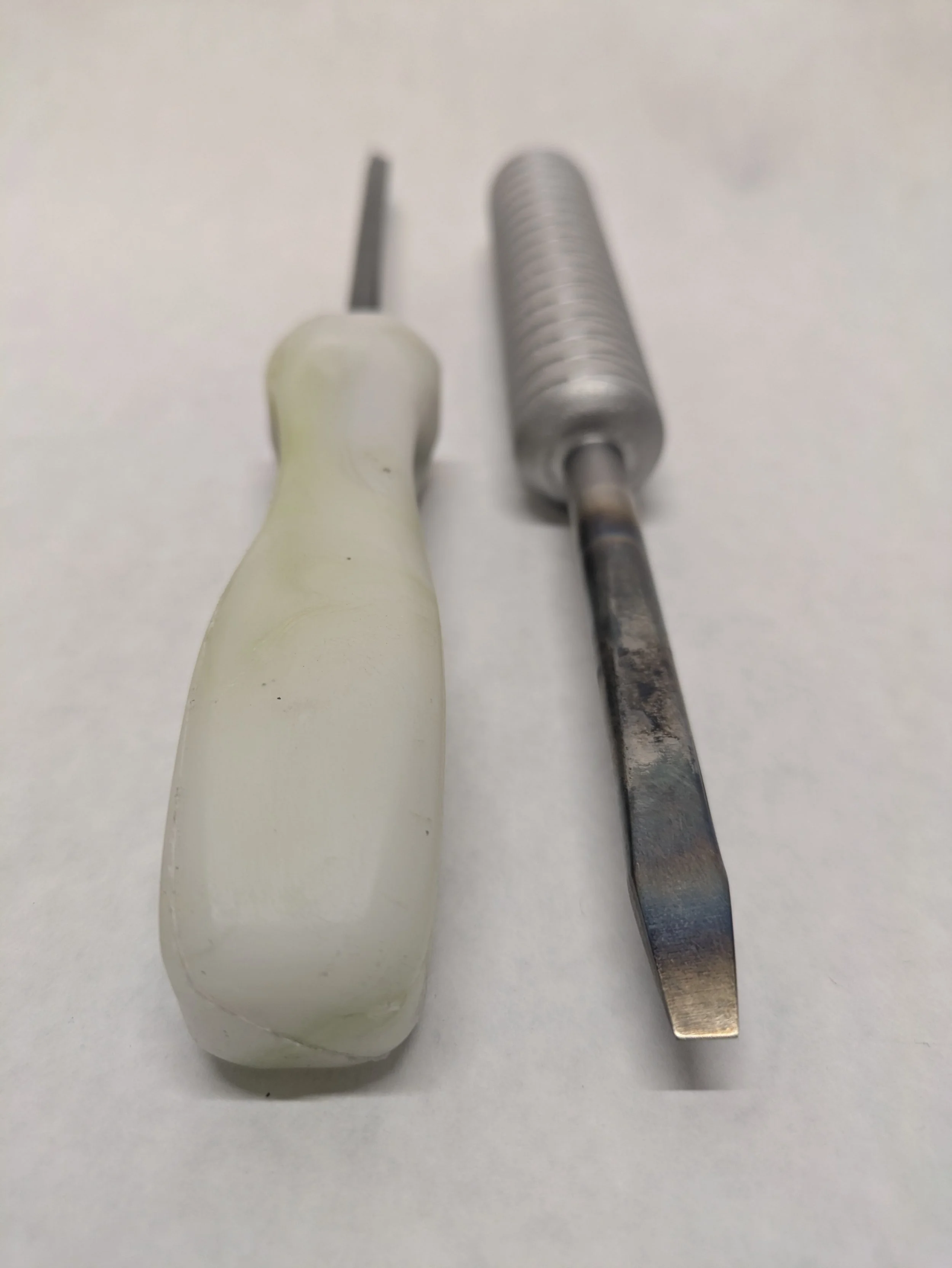
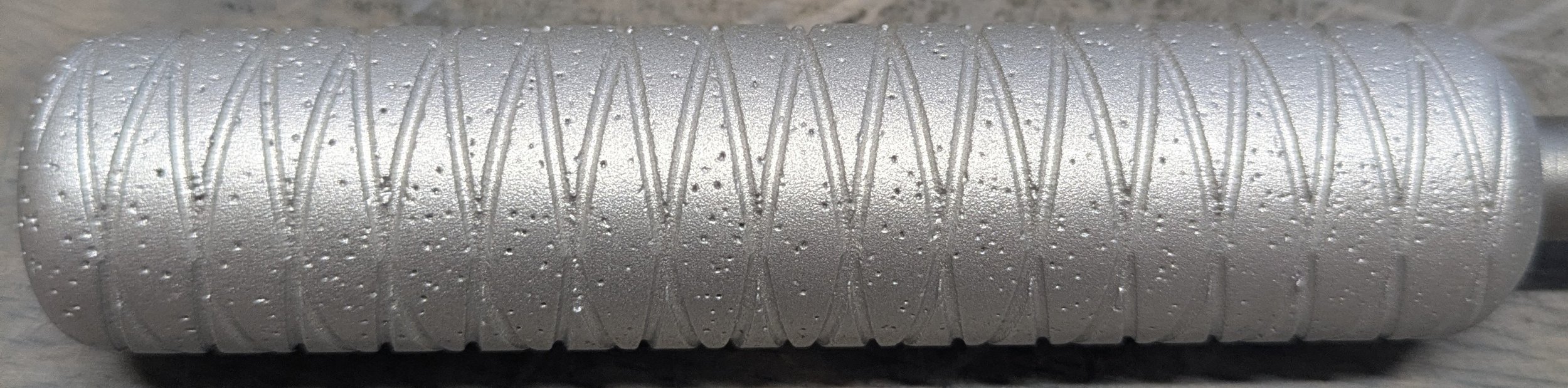
Knurling is not the only handle option, talk to your GTA and experiment if you are interested
Following the print is essential to getting a good grade
Even though my project is visually correct and aesthetically pleasing, all necessary tolerances were out of spec, down to the chamfers
This was due partly to hubris, and mostly to lack of time. I was so pressed for time that grinding to a functional shape took priority, with my grade and function suffering
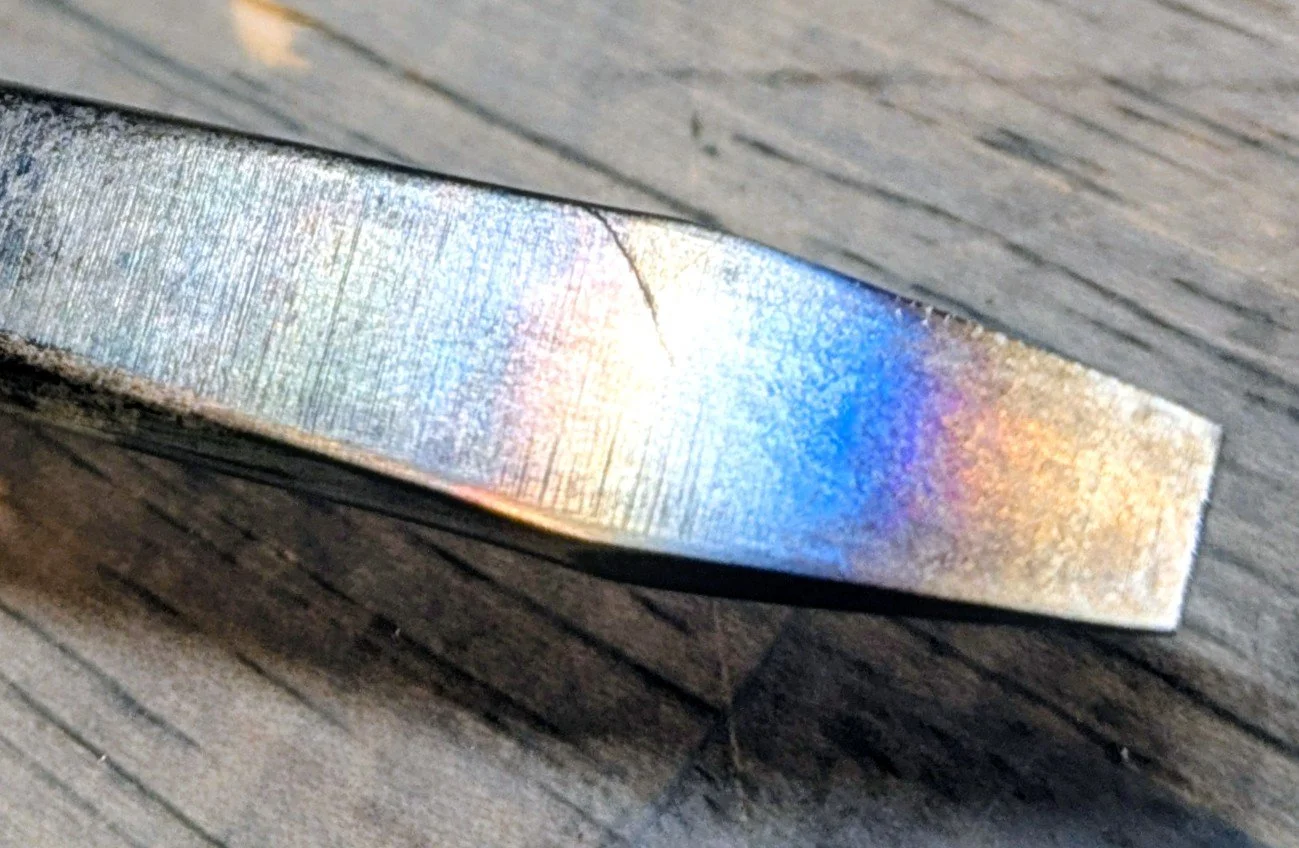
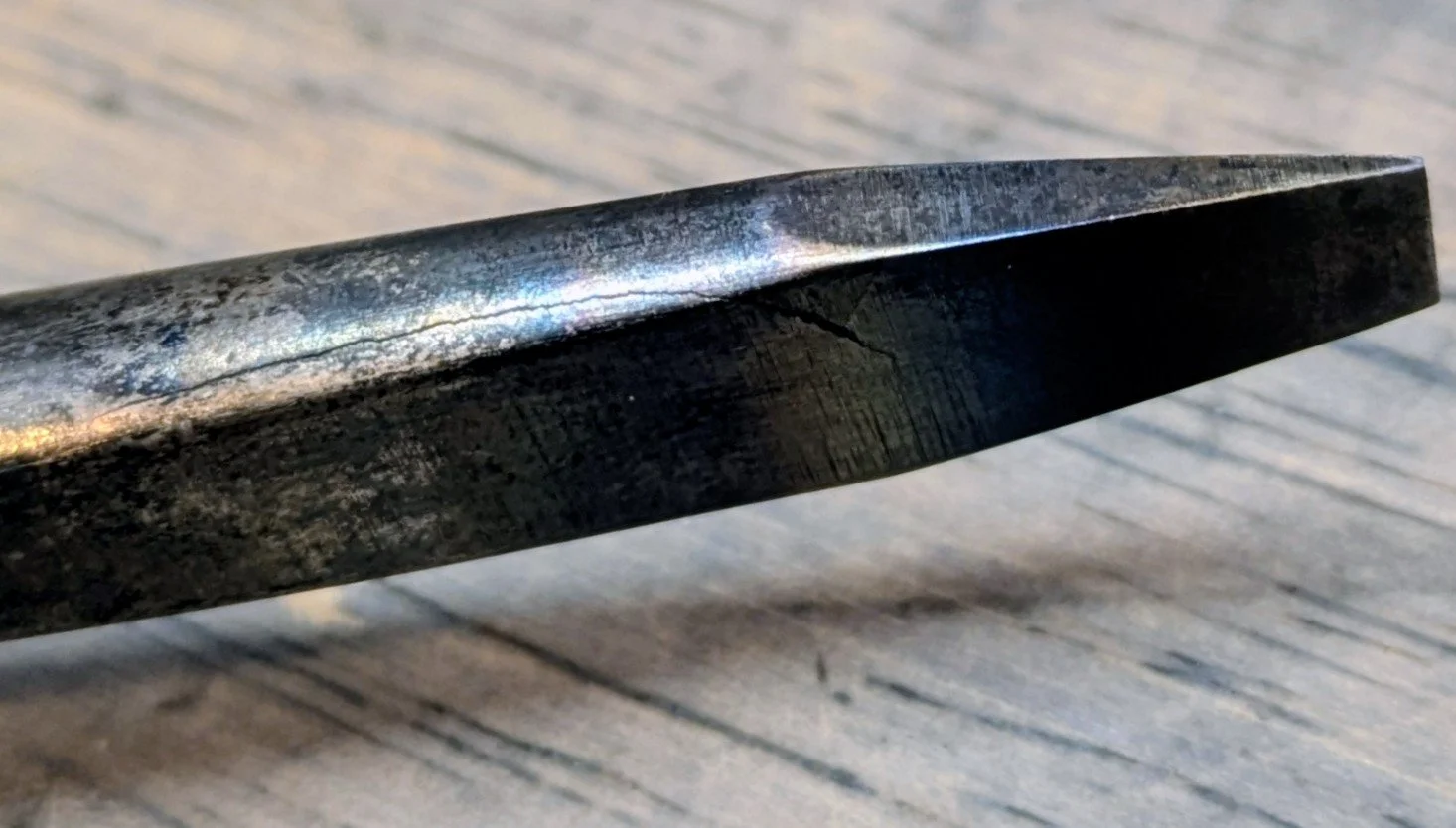
Pay close attention to the heat treatment, my flat blade screwdriver has a stress fracture, meaning it has now become a very poor paperweight!
Bead blasting - it’s your friend, and your biggest foe
The surface finish produced is even, beautiful, and consistent
It loves to pick up scratches and mars if you so much as think about it too hard
DON’T BE AFRAID TO ASK QUESTIONS
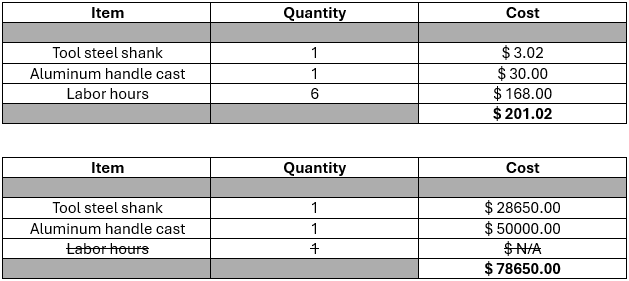
Ideas to improve efficiency, and reduce cost to industrial process levels
Bulk material purchases: Can save 10% or more on raw material cost
Automated grinding and finishing process: This is perhaps the biggest potential time saver. Using jigs and automated processes, a single screwdriver can be accurately ground to tolerance within a matter of seconds or minutes, not hours
Automated finishing: Bead blasting on a bulk scale can be completed in a matter of a few seconds, opposed to the several minutes of a by-hand process
Cost of 10,000 unit process - EMEC vs. Industrial
The total cost to produce 10,000 units in the industrial process is $ 78,650
The total cost to produce 10,000 units with the EMEC process is over two million dollars! ( $ 2,010,200 )
Similarly to the clock project, the manufacture time will vary considerably. In an industrial process, it’s possible to cast, forge, grind, heat-treat and finish an entire screwdriver within approximately 10 - 15 minutes. This allows for all 10,000 units to be produced in less than a year.
The EMEC production process would require nearly 4 years of full shift work to complete all 10,000 units.
Cost comparison for a single EMEC-process unit vs.
Industrial 10,000 unit process